Sweden Fines Miljödata Over Breach of 2.2 Million People
IMY fined the HR software supplier SEK 1.8 million after a 2025 attack exposed sick leave, rehabilitation and school incident data.
Sweden's privacy regulator IMY has fined HR software supplier Miljödata SEK 1.8 million (about $183,000) over a 2025 cyberattack that exposed data on 2.2 million people, SafeState reports.
Timeline
- August 25, 2025: Miljödata is hit by a cyberattack from an external attacker who accesses data they had no authorization to view 2.
- August 26, 2025: Miljödata reports the personal data incident to IMY 1.
- Shortly after: the leaked data is published on the dark web under the name "Datacarry" 2.
- November 2025: IMY launches a formal investigation into whether Miljödata's security failures violated its GDPR obligations 2.
- September 22, 2026: IMY issues its decision and imposes the SEK 1.8 million fine 1.
Who Miljödata is
Miljödata is a Swedish software company that develops work environment and HR management systems. According to BleepingComputer, its systems are used by about 80% of Sweden's municipal authorities 2. Among the customers affected by the attack were a majority of Sweden's municipalities, several regions, government agencies, and a large number of private companies, according to IMY's press release 3.
What happened in the attack
A threat actor gained unauthorized access to Miljödata's systems and obtained a large volume of personal data, which was later published on the dark web. BleepingComputer reported that the attacker demanded a ransom of 1.5 bitcoin — worth about $168,000 at the time — to avoid leaking the stolen information, but published it anyway under the name "Datacarry" 2.
What was exposed
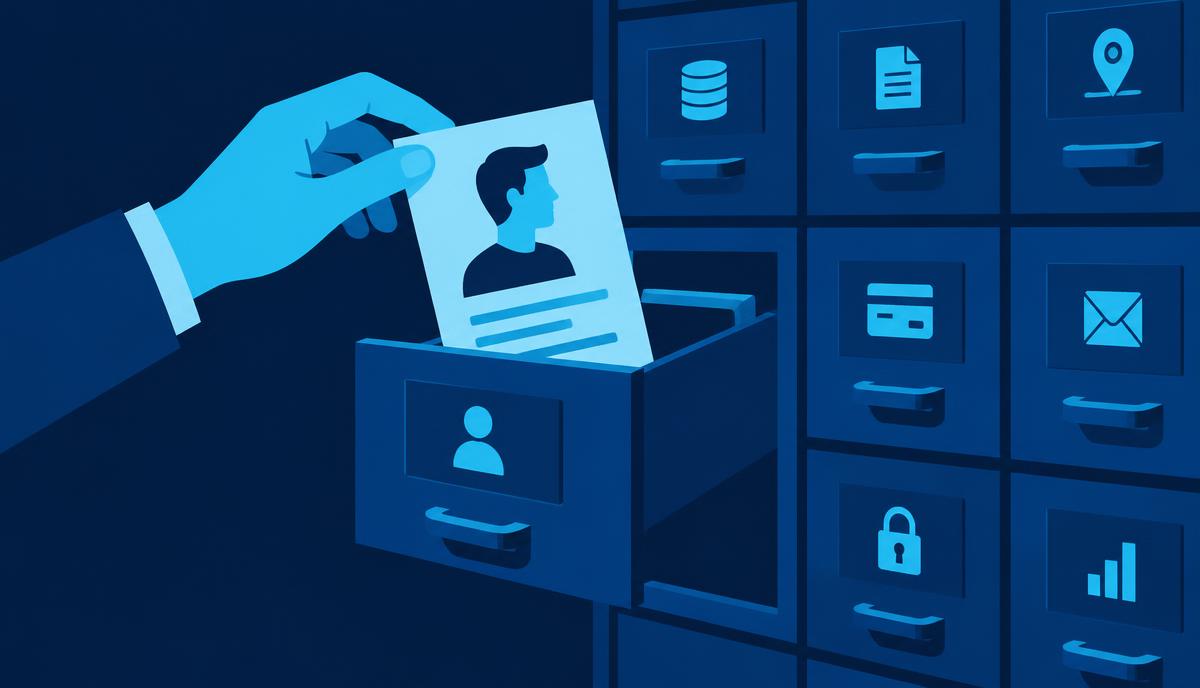
Data processed for employers and public bodies, including:
- National identity numbers
- Sick leave details
- Rehabilitation cases
- Incidents involving school pupils
IMY's own summary noted that the leak largely involved personal data of current and former employees of Miljödata's customers, and that children's personal data and the data of people with protected identities had also been processed in Miljödata's systems and leaked after the attack, according to a supervisory letter IMY sent to one affected region 5.
What IMY found
- Miljödata did not run adequate checks when installing new software.
- It had no automated, real-time monitoring to detect intrusions.
IMY ruled this breached Article 32(1) of the GDPR and that the company acted negligently. It is still examining the public bodies that used Miljödata's systems — IMY has opened separate reviews of two municipalities and one region in connection with the attack — so more penalties are possible 3.
IMY's official announcement stated: "IMY's investigation shows that the company did not maintain a sufficiently high level of technical and organizational security, considering the types of personal data it processed. The company did not perform sufficient checks when installing new software and did not have automated real-time monitoring of its systems to detect intrusions and suspicious activity" 2.
IMY's Director General, Eric Leijonram, said: "GDPR ställer krav på lämpliga säkerhetsåtgärder för de personuppgifter man hanterar. Här har Miljödata brustit och resultatet är att en hotaktör kom över uppgifter om en stor del av Sveriges befolkning. Vi ser allvarligt på det inträffade. Min förhoppning är att även andra verksamheter tar till sig av sanktionsbeslutet och vid behov ser över säkerheten för de personuppgifter man själv ansvarar för" — roughly translated, that the GDPR requires appropriate security measures, that Miljödata failed in this regard, resulting in a threat actor obtaining data on a large part of Sweden's population, and that IMY views the incident seriously and hopes other organisations will review their own security as a result 4.
Is the fine too small?
As P.K. Sharma points out, it works out at about six pence per person — but measured against Miljödata's 2025 turnover of about SEK 58 million, it is a significant share of revenue.
Why it matters
A single software supplier's weakness exposed data on roughly a fifth of Sweden's population. Organizations are responsible for checking the security of the vendors they hand data to. Because Miljödata's HR software was used by roughly 80% of Swedish municipalities, the incident also demonstrates how concentrated risk has become in the public sector: a single vendor's security lapse can ripple across hundreds of government bodies simultaneously, rather than being confined to one organisation's own systems.
Why GDPR enforcement against vendors, not just data controllers, matters
Under the GDPR, both the organisations that decide how personal data is used (controllers, in this case the municipalities and regions) and companies that process data on their behalf (processors, like Miljödata) can face scrutiny and sanctions for inadequate security. IMY's decision to fine Miljödata directly — while separately investigating the municipalities and region that used its software — reflects an increasingly common regulatory approach across Europe: holding technology vendors accountable for the security of systems that handle sensitive citizen data, rather than only examining the public bodies that chose to use them.
What readers should do
- If you are, or were, a Swedish municipal or regional employee, treat any unexpected contact referencing your national identity number, sick leave or rehabilitation case as potentially fraudulent, since this data was exposed.
- Parents of schoolchildren in affected municipalities should be alert to scams referencing school incident records, which were among the data types exposed.
- People with protected identities affected by the breach should contact the relevant authority to ask about additional protective measures.
- Organisations using third-party HR or administrative software should review whether their vendor runs real-time intrusion monitoring and vets new software installations, the two failures IMY identified.
- Follow IMY's ongoing investigations into the municipalities and region involved, since further penalties or guidance may follow.
Lessons for other countries
The Miljödata case illustrates a pattern regulators across Europe are increasingly focused on: software vendors that serve public-sector clients at scale can become single points of failure for data protection across an entire country's government apparatus. Similar vendor-driven breaches affecting municipalities and public bodies have prompted other European data protection authorities to scrutinise vendor security requirements more closely, and the size of Miljödata's fine relative to its revenue — rather than relative to the number of people affected — may become a reference point for how future GDPR enforcement against smaller vendors is calculated.
Sources & Verification
Additional reporting
- SafeStatesafestate.com
- P.K. Sharmapk-sharma.com
- IMY decision (PDF)imy.se
- BleepingComputerbleepingcomputer.com
- IMY press release via Public Nowpublicnow.com
- Göteborgs-Postengp.se
- IMY supervisory letter to Region Västmanlandimy.se