US Says Chinese Hackers Breached DOJ, NASA and Senate
The Justice Department seized domains for the QScan and QTRouter hacking platforms, saying China-backed hackers hit US agencies since 2018.
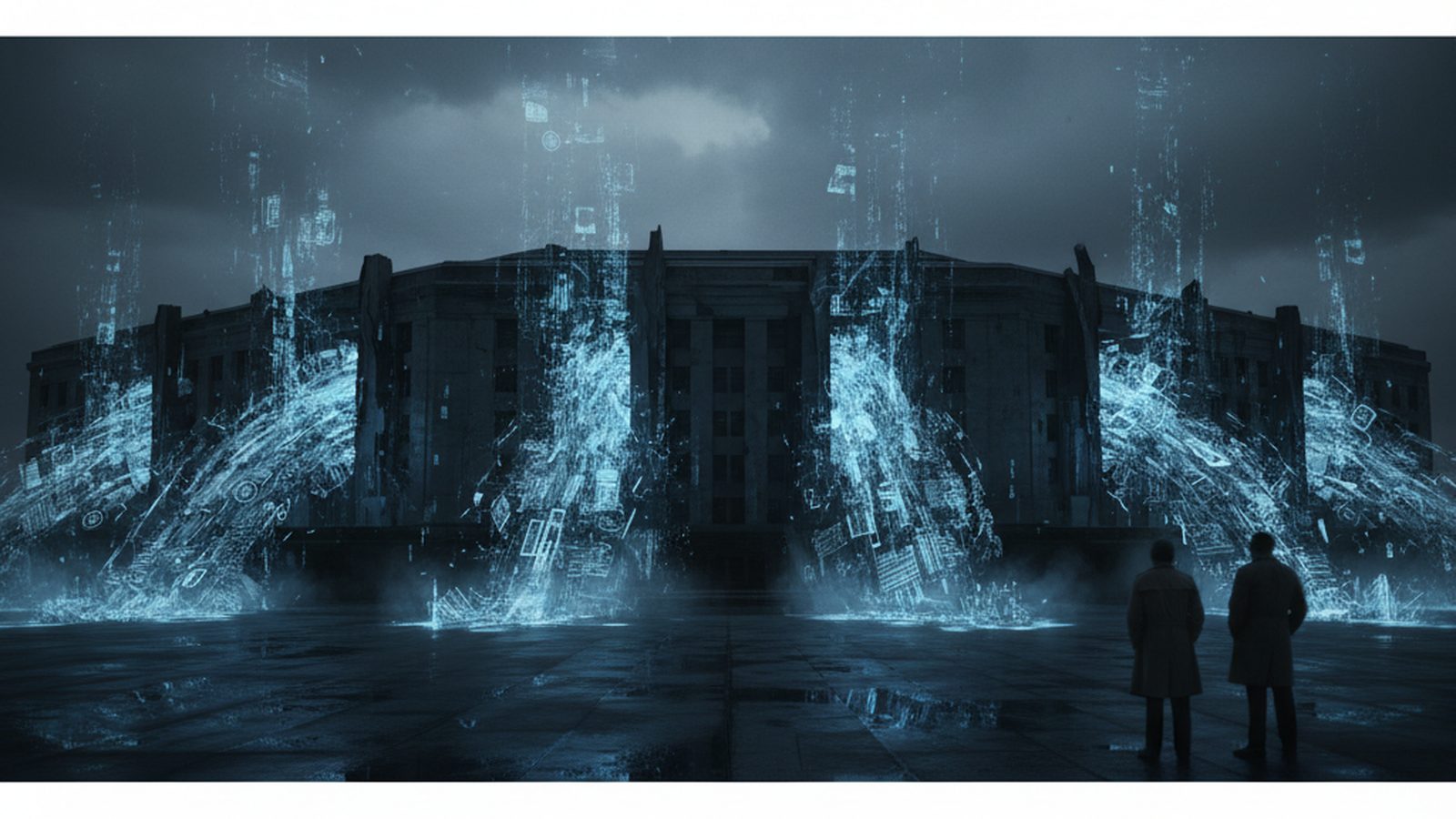
The US Justice Department says Chinese state-sponsored hackers broke into the Justice Department, NASA, the Federal Reserve and the Senate, Reuters reports.
What the government did
- Seized domains used by two hacking platforms, QScan and QTRouter, in court-authorized action announced on August 26, 2026.
- Filed an affidavit naming further victims, including the Departments of Energy and Health and Human Services, the National Institutes of Health, and four US and South Korean companies.
- Said the hackers had targeted sensitive US and global networks since at least 2018.
- Attributed the platforms to a group called "QTFY," which the DOJ says was created and operated by China-based company Nanjing Xinjiuwei Network Technology Company (南京鑫玖维网络科技有限公司), according to the Justice Department's press release.
Who said what
Attorney General Todd Blanche said: "State-sponsored malicious hackers preying on America's critical infrastructure will be stopped and prosecuted. We are here to ensure security for the American people and will use every tool we have to keep that promise. Federal law enforcement investigated and disabled the PRC's malicious software, the latest in a series of technical operations to dismantle indiscriminate hacking activities sponsored by the People's Republic of China."
FBI Director Kash Patel added: "Today we announced the disruption of a global botnet and hacking platform used by Chinese state-sponsored hackers to target U.S. critical infrastructure. These tools were used by PRC cyber actors to hide the origin of their attacks. Thanks to the work of FBI San Diego, FBI Cyber Division..."
What QScan and QTRouter did
Court filings describe QScan and QTRouter as "complementary hacking platforms" used to target US critical infrastructure and other sensitive networks. A court filing cited by CNBC states that "other targeted networks include those operated by hospitals, telecommunications providers, power companies, financial institutions, and defense contractors" — indicating the operation's reach extended well beyond federal agencies into the private sector. CNBC also reported that the DOJ "did not detail the damage to the agencies or other targets from the computer intrusions."
Timeline
- At least 2018: According to the unsealed affidavit, QTFY begins targeting sensitive US and global networks.
- August 26, 2026: The Justice Department and FBI announce the court-authorized seizure of the QScan and QTRouter domains, unsealing supporting court documents in the Southern District of California.
- August 27, 2026: Reuters updates its initial report with additional detail on the scope of victims named in the unsealed affidavit.
- August 31, 2026: CNBC updates its coverage, noting the DOJ's description of victims extended to hospitals, telecoms, power companies, financial institutions and defense contractors.
Why it matters
The list of victims covers law enforcement, space, central banking and lawmakers — a sign of how broad China's intelligence collection is. Seizing infrastructure disrupts the operation and forces hackers to rebuild, though it rarely stops a state-backed group for long. The DOJ described the action as "the latest in a series of technical operations to dismantle indiscriminate hacking activities sponsored by the People's Republic of China," signaling that this seizure is part of an ongoing, long-running US effort rather than an isolated event.
Scale of the botnet
The FBI described the disrupted infrastructure as "a global botnet and hacking platform," language that suggests QScan and QTRouter were used not only for direct intrusions but also to recruit or hijack additional devices worldwide to mask the true origin of attacks and complicate attribution efforts by network defenders.
Background: how domain seizures work as a disruption tool
US law enforcement agencies have increasingly used court-authorized domain and infrastructure seizures as a way to disrupt state-sponsored and criminal hacking operations without needing to arrest the individuals involved, who in cases involving Chinese state-sponsored actors are typically based outside US jurisdiction and unlikely to ever face US courts. By seizing the domains that a hacking platform depends on to route traffic and hide its origin, the FBI can at least temporarily cut off an active operation's infrastructure, buying defenders time and forcing the operators to rebuild new infrastructure — even though such seizures are understood to be a disruption rather than a permanent solution against well-resourced state-backed groups.
A pattern of broad targeting
The breadth of the named victims — spanning scientific research (NASA), monetary policy (the Federal Reserve), law enforcement (the Justice Department itself), the legislature (the Senate), energy, health research and private companies in both the US and South Korea — is consistent with a long-documented pattern of Chinese state-sponsored cyber-espionage efforts aimed at collecting intelligence across nearly every sector of government and critical infrastructure, rather than narrowly focusing on any single type of target.
South Korean companies also named
Besides US federal agencies, the unsealed affidavit also identified four private companies in the US and South Korea as victims, according to Reuters, underscoring that the campaign's targeting extended beyond government institutions into commercial networks in allied countries.
What it means for organizations
Government contractors and companies that work with these agencies are often used as stepping stones. They should:
- Patch internet-facing devices such as routers and VPNs quickly, as these are a favourite entry point for Chinese groups.
- Watch for unusual traffic to newly registered or unfamiliar domains.
- Review logs for any historical connections to infrastructure associated with QScan or QTRouter, since the campaign is reported to have been active since at least 2018, meaning some compromises may be long-standing and undetected.
- Treat vendor and supply-chain relationships with agencies or sectors named as victims (energy, health research, financial, defense) as a potential indirect exposure path, even if your own organization was not directly named.
What readers should do
- If your organization works as a contractor or vendor for any of the named agencies — the Justice Department, NASA, the Federal Reserve, the Senate, the Departments of Energy or Health and Human Services, or the National Institutes of Health — review your own network logs for signs of compromise dating back several years, given the affidavit's claim that the activity dates to at least 2018.
- IT and security teams should ensure internet-facing routers, VPNs and other edge devices are fully patched, since these remain a preferred entry point for Chinese state-sponsored hacking groups.
- Follow official guidance from CISA and the FBI for any published indicators of compromise tied to QScan, QTRouter, or the QTFY group, and report suspected related intrusions to federal authorities.
- Recognize that infrastructure seizures like this one disrupt but do not eliminate a state-sponsored group's capability; continue monitoring for new infrastructure that may replace what was seized.
Sources & Verification
Primary sources
- US Department of Justicejustice.gov