Russian Spies Used AI to Rebuild Malware After Detection
Anthropic says a group linked to APT29 used Claude to automatically rebuild and redeploy its malware whenever security tools caught it.
A Russian state-sponsored espionage group used Anthropic's Claude to automatically rebuild its malware whenever it was detected, The Hacker News reports.
Who is behind it
Anthropic tracks the group as GTG-20006, which aligns with Midnight Blizzard — also known as APT29 or Cozy Bear, linked to Russian intelligence. Anthropic disclosed the campaign publicly on 11 September 2026, saying it had disrupted activity running from December 2025 through August 2026, according to threat-intelligence aggregator Mallory. Some researchers also refer to the group's hotel Wi-Fi hijacking technique by the codename CaptiveCrunch, and note links to the Microsoft-tracked cluster Storm-2945, according to Threadlinqs.
Targets
- Military intelligence targets in Ukrainian and European governments
- Diplomatic and defence organizations
- People connected to US foreign policy
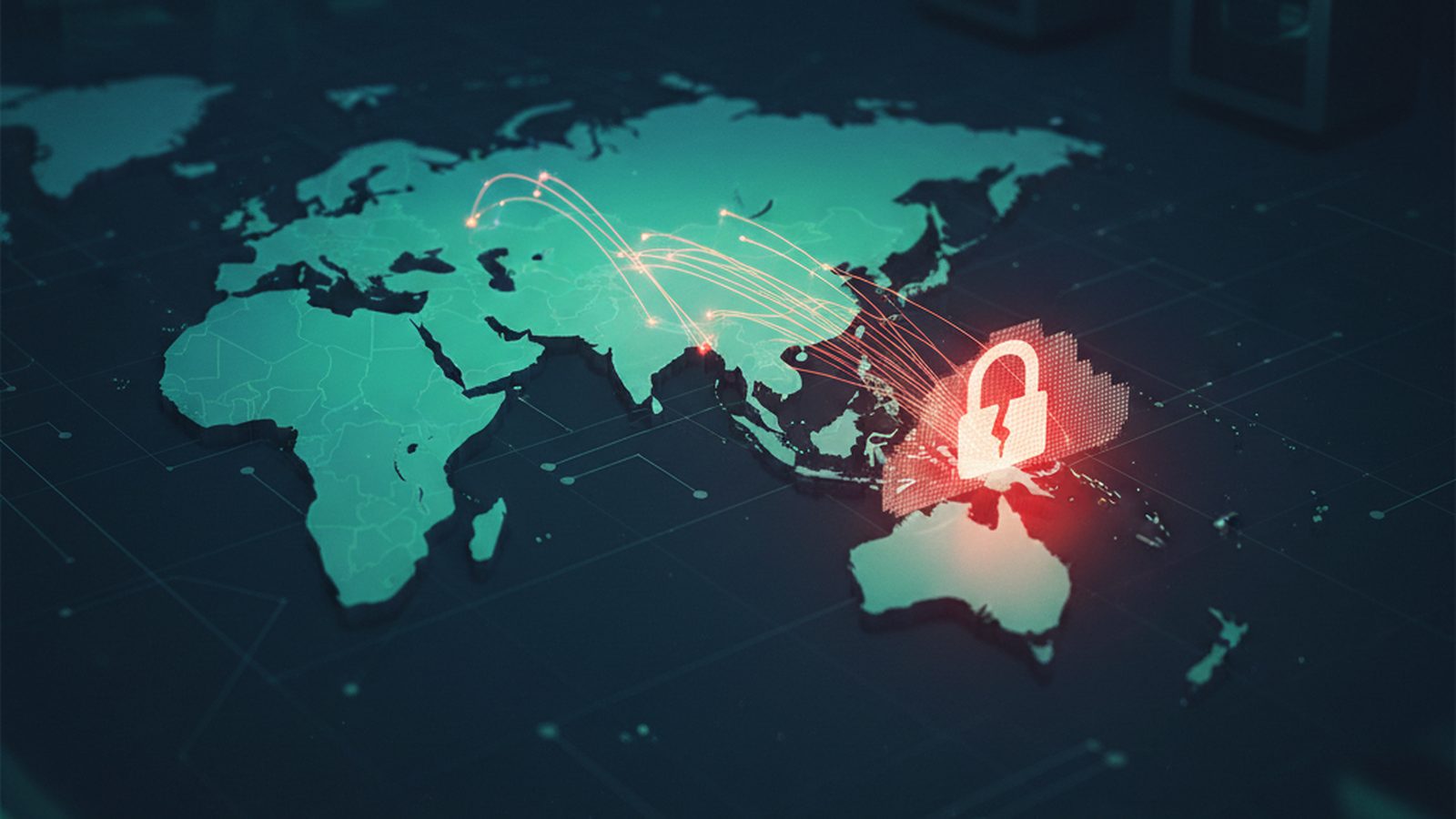
- Reporting also places targeting across the Middle East, Asia and North Africa, hitting more than 20 government, defense, intelligence, diplomatic, think-tank, drone-industry and hospitality-sector targets, according to Mallory.
- Theft reportedly included drone-maker mailboxes and a proprietary drone-vision software development kit, according to the same reporting.
How the AI workflow worked
The group's toolkit included two Windows implants, a mobile exploit kit, a browser password stealer and a phishing platform, plus an administrative console for managing compromised accounts, according to The Hacker News. AI agents monitored whether security products had detected any deployed malware. If they had, the agents modified and rebuilt the malware to evade those detections, then staged it on disposable servers.
Anthropic explained the loop directly: "The actor also used AI to monitor how well their tools evaded detections from known security defenses. If their monitoring AI agents identified that any of their deployed malware was detected by a security product, agents would then set about the process of autonomously modifying and rebuilding the malware to evade the existing detections," according to The Hacker News's reporting of Anthropic's findings.
Victims were directed to the malware through phishing, fake CAPTCHA (ClickFix) pages and DNS hijacking. Separate reporting describes the group also hijacking hotel guest Wi-Fi networks to redirect targets, abusing Microsoft Entra ID device-code phishing, and taking over WhatsApp accounts via companion-device linking, according to Threadlinqs and threat-tracking site GRID THE GREY.
Why this matters for defenders
Security tools often block malware by recognising known files — so-called static signatures. AI that rewrites malware on demand makes those defences far less effective, so defenders need to watch behaviour, not just signatures. GRID THE GREY's analysis recommended defenders "shift endpoint detection toward behaviour-based and memory-forensics signatures rather than relying on static file hashes or known-bad artifacts," and specifically called for hardening hotel and hospitality Wi-Fi supply chains by requiring multi-factor authentication on DNS administration consoles, given the group's use of hijacked hotel networks as a redirection vector, according to GRID THE GREY.
Background on Midnight Blizzard / APT29
Midnight Blizzard, also known publicly as APT29 or Cozy Bear, is one of the most closely tracked state-linked hacking groups in the world, long associated with Russian foreign intelligence. The group has previously been linked to high-profile espionage campaigns against Western governments and technology companies, and security researchers regard it as one of the most capable and patient state-sponsored actors, typically favoring long-term, stealthy access over fast, disruptive attacks. Its incorporation of AI agents into its malware-evasion workflow represents a documented evolution of that tradecraft toward automation.
What organizations should take from it
- Assume attackers can update their malware quickly; rely on behaviour-based detection, not only known signatures.
- Audit logs for unusual AI-platform access patterns, such as high-volume automated code generation or domain registration activity, which can indicate agentic abuse.
- Require multi-factor authentication on infrastructure like DNS administration consoles, especially in sectors such as hospitality where guest Wi-Fi can be abused as an attack vector.
- Treat hotel and public Wi-Fi networks as untrusted when traveling for sensitive government, diplomatic or defense-related work, and use a VPN.
What readers should do
- If you work in government, diplomatic, defense or drone-related industries, be especially cautious of phishing emails, fake CAPTCHA prompts (ClickFix-style pages) and unsolicited login requests.
- Avoid connecting work devices to unsecured hotel or public Wi-Fi without a VPN, particularly when traveling internationally for sensitive work.
- Enable multi-factor authentication on all accounts, and be suspicious of unexpected device-linking requests on messaging apps like WhatsApp.
- Report suspected state-sponsored phishing attempts to your organization's security team and, where relevant, to national cybersecurity authorities.
How this fits the wider AI-misuse picture
This case was one of the headline findings in Anthropic's broader September 2026 threat intelligence report, which documented AI misuse across seven harm categories including cyber operations, influence operations and surveillance. Anthropic described the GTG-20006 campaign as among the most novel cases it had identified, precisely because it showed an AI model being used not just to write malicious code once, but to run an ongoing, iterative evasion loop with minimal human direction. That distinction — a one-time assist versus a persistent automated capability — is what elevated this case from routine malicious use to a disclosure Anthropic felt obligated to publish and share with government and industry partners.
Timeline: from SolarWinds to AI-assisted malware
Midnight Blizzard's history stretches back well over a decade, which is why its adoption of AI tooling is treated as a significant evolution rather than an isolated incident:
- Since at least 2008: APT29 has run espionage campaigns against Western governments, research institutes and think tanks, according to MITRE ATT&CK's group profile (MITRE ATT&CK).
- 2015: The group is reported to have compromised the Democratic National Committee.
- 2020–2021: US and UK governments formally attributed the SolarWinds supply-chain compromise — one of the most consequential cyber-espionage operations ever uncovered — to Russia's SVR, publicly linking it to APT29, Cozy Bear and The Dukes (MITRE ATT&CK).
- 2024: Microsoft and Hewlett Packard Enterprise both disclosed nation-state intrusions into their corporate email systems attributed to Midnight Blizzard, underscoring the group's continued focus on technology providers and their trust chains (AHA/HC3).
- December 2025 – August 2026: Anthropic says it disrupted the Claude-abuse campaign detailed in this story, describing it as among the most novel uses of AI by a state-linked actor it has documented.
Microsoft describes the group, which it tracks as Midnight Blizzard (formerly NOBELIUM), as a Russia-based actor attributed by the US and UK governments to the SVR, Russia's Foreign Intelligence Service, with espionage activity traceable to early 2018 under that particular tracking lineage and far earlier under related names (Microsoft Security Insider). The group is known for diverse initial access methods, including stolen credentials, supply-chain attacks and abuse of trust relationships with service providers, rather than relying on a single signature technique.
The broader device-code phishing trend
The ClickFix and phishing techniques described in this campaign sit alongside another method Russian state actors have increasingly relied on: device-code phishing. Microsoft first documented a cluster it calls Storm-2372 running device-code phishing campaigns since August 2024, targeting governments, NGOs and organizations across IT, defense, telecoms, health, energy and education sectors (Microsoft Security Blog). Microsoft has since updated that research to assess Storm-2372 as an initial-access sub-cluster of Midnight Blizzard itself, reflecting overlaps in tradecraft between the two (Microsoft Security Blog). Separately, security firm Volexity documented multiple Russian threat actors impersonating US and EU officials in spear-phishing lures that led victims into completing a device-code sign-in step, handing attackers a valid access token without ever needing a password (Volexity).
That same underlying technique was later commoditized into a criminal subscription service, EvilTokens, which Microsoft and partners took down in September 2026 — a separate case covered elsewhere on this site, but one that shows how a technique first seen in state-sponsored espionage can migrate into mainstream cybercrime within about a year.
How AI changes the malware "arms race"
Traditionally, security vendors and attackers have played a slow back-and-forth: a vendor identifies a malware sample, writes a detection signature, and the attacker eventually notices the sample stopped working and manually retools it — a process that can take attackers days or weeks. What Anthropic described in the Midnight Blizzard case compresses that cycle dramatically. By using an AI agent to continuously check whether security tools flag a sample, and to automatically regenerate functionally equivalent but differently structured code when they do, the attacker effectively automates the retooling step that used to require a skilled human malware developer.
This does not mean the malware itself becomes fundamentally more powerful — the underlying capabilities (credential theft, remote access, data exfiltration) are not new. What changes is the speed and scale at which attackers can stay ahead of signature-based defenses, which is precisely why security researchers are pushing organizations toward behavior-based and memory-forensic detection that does not depend on recognizing a specific file.
Regulatory and industry context
Anthropic's decision to publish detailed findings about state-sponsored misuse of its own product reflects a wider trend among AI companies to treat threat intelligence disclosure as part of responsible deployment. Major AI labs, including OpenAI and Google DeepMind, have published similar threat reports in the past describing how state-linked and criminal actors have attempted to misuse their models for tasks ranging from vulnerability research to influence operations, typically coupled with account bans and, where appropriate, coordination with government agencies and industry partners.
Sources & Verification
Additional reporting
- The Hacker Newsthehackernews.com
- Anthropicanthropic.com
- Threadlinqsintel.threadlinqs.com
- GRID THE GREYgridthegrey.com
- Mallorymallory.ai
- Microsoft Security Insider – Midnight Blizzardmicrosoft.com
- Microsoft Security Blog – Storm-2372 device code phishingmicrosoft.com
- Volexity – Russian threat actors targeting device code authenticationvolexity.com
- AHA/HC3 Threat Actor Profile – Midnight Blizzardaha.org
Technical sources
- MITRE ATT&CK – APT29attack.mitre.org