
Deepfake Voice Scams: How to Verify a Caller
Scammers are using AI to clone voices for urgent, convincing phone calls. Learn the red flags of a deepfake voice scam and how to verify a caller's identity.
By Sam Reyes · Published · 12 min read
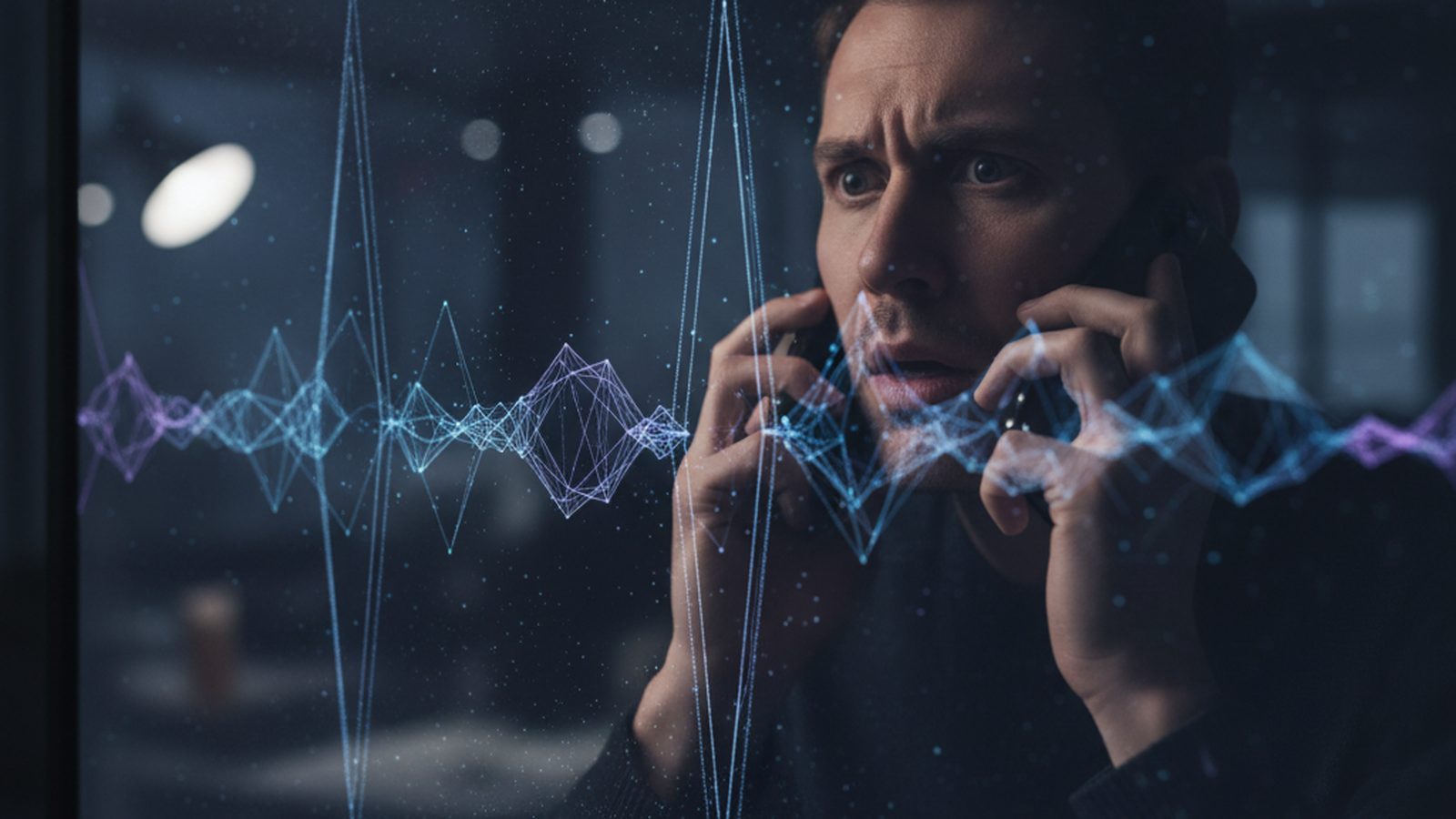
The best way to verify a caller and defeat a deepfake voice scam is to hang up and call them back on a number you know is genuine. Scammers use AI-generated voice clones to create a sense of panic and urgency, tricking you into acting before you can think. By independently verifying the caller's identity through a trusted channel, you break the cycle of manipulation and expose the fraud.
What Are Deepfake Voice Scams?
Voice cloning, also known as voice synthesis, uses artificial intelligence to create a realistic simulation of a person's voice. A scammer may only need a few seconds of your audio—grabbed from a social media video, a public speech, or even a leaked voicemail—to train an AI model. The model can then be made to "speak" any words the scammer types into a text-to-speech engine. These scams, a form of vishing (voice phishing), are uniquely potent because hearing a loved one's voice creates an immediate emotional connection that text-based phishing lacks.
The most common scenarios involve manufactured emergencies designed to short-circuit your critical thinking:
- The "Grandparent Scam": A scammer calls an older person, impersonating their grandchild who is supposedly in jail, a hospital, or stranded abroad and in desperate need of money.
- CEO Fraud: An employee receives a call from someone who sounds exactly like their boss, demanding an urgent and confidential wire transfer to a new vendor or to close a secret deal.
- Kidnapping Hoaxes: A parent receives a terrifying call with a child's synthesized voice crying for help, followed by a "kidnapper" demanding a quick ransom payment.
In all these cases, the goal is the same: to create a crisis so overwhelming that the victim pays up without stopping to question the situation.
The Anatomy of a Voice Cloning Attack
A sophisticated voice scam is more than just a cloned voice; it's a multi-stage social engineering attack. The process is systematic and leverages both technology and psychology.
First comes reconnaissance. The attacker gathers intelligence. They find a voice sample of the person they want to impersonate, often from public videos on platforms like TikTok, Instagram, or Facebook. Simultaneously, they research the target—you. They use your public social media profiles and information found in data breaches to understand your family relationships, your employer, and recent life events. This context is what makes the scam feel personal and believable.
Next is the voice cloning. Using increasingly accessible and affordable AI voice generation services, the scammer uploads the audio sample. The technology has advanced at a shocking pace; some tools can produce a high-fidelity clone from just a short clip in minutes. The barrier to entry is lower than ever.
With the voice ready, the attacker moves to scripting. They craft a narrative designed for maximum emotional impact. The script will create a sense of extreme urgency, helplessness, and secrecy, often including phrases like "Don't tell Mom and Dad, I'm so embarrassed" to isolate the victim. As AI models become more powerful, attackers can even use them to generate more convincing and natural-sounding scripts, a trend detailed in recent security research like the Anthropic report on how hackers misuse AI models.
Finally, there's the execution. The call is placed, often using number spoofing technology to make the caller ID appear legitimate. The scammer, or the AI itself, delivers the performance, preying on the victim's panic to bypass their rational mind and secure a quick, irreversible payment.
Telltale Signs of a Deepfake Voice Call
While AI voices are becoming alarmingly realistic, they are not yet perfect. If you remain calm and listen carefully, you can often spot the seams. Be alert for these subtle red flags during any unexpected, high-stakes call.
- Unnatural Cadence or Pacing: The speech might have odd pauses as the AI generates the next phrase, or it might have a flat, monotonous rhythm that lacks the normal emotional intonation you'd expect in a crisis.
- Perfectly Clean Audio: Most real phone calls have some ambient background noise—traffic, other people talking, a fan. A call that is unnervingly silent apart from the voice can be a sign of a studio-generated fake. Conversely, some scammers add generic static or "bad connection" sounds to mask AI imperfections.
- Odd Breathing or Digital Artifacts: You might notice a lack of realistic breathing sounds between sentences or hear subtle digital glitches, a hallmark of synthesized audio.
- Extreme and Unrelenting Urgency: The core of the scam is pressure. The caller will insist on immediate action and try to keep you on the line, preventing you from thinking or talking to anyone else. They will have an excuse for why they can't accept any alternative to their plan.
- Specific Payment Demands: Scammers demand payment via methods that are fast, anonymous, and difficult to reverse. These include wire transfers, cryptocurrency, and providing the numbers on the back of retail gift cards. Legitimate organizations and real family members in trouble will almost never ask for payment this way.
- Inability to Have a Real Conversation: A deepfake voice is a puppet. It can't respond spontaneously to unexpected questions. If you ask a question referencing a shared memory not available online, the scammer controlling the AI will likely deflect, get angry, or hang up.
How to Verify a Caller's Identity: A Step-by-Step Guide
If you receive a suspicious call that sets off your internal alarms, follow these steps without deviation. Your adherence to this process is your strongest defense.
- Resist the Urge to Act. Panic is the scammer's greatest weapon. Take a deep breath. The world will not end if you take five minutes to verify the story. A real emergency will still be an emergency in five minutes; a fake one will be exposed.
- Hang Up the Phone. This is the single most important step. Politely or not, just end the call. This breaks the scammer's control and gives you the space to think clearly. Do not worry about being rude; your financial and emotional security are paramount.
- Call Back on a Trusted Number. Do not call back the number that just called you, as it could be spoofed or controlled by the scammer. Use the person's number from your phone's contact list, a family directory, or your company's official internal directory. If you can't reach them directly, call another trusted family member, friend, or colleague to check on the person.
- Establish a Code Word (Proactively). The best defense is one you prepare in advance. Agree on a secret "safe word" or "duress phrase" with your close family and colleagues. It should be something unique and memorable that a scammer could never guess from your social media. In a potential emergency, you can ask, "What's our safe word?" If they don't know it, it's a scam.
This simple verification table shows how a scammer's reaction differs from a legitimate caller's.
| Your Action | Scammer's Reaction | Real Person's Reaction |
|---|---|---|
| :--- | :--- | :--- |
| You hang up to call back | Tries to keep you on the line; gets angry or threatening. | Understands your caution; waits for your call. |
| You ask a personal question | Deflects, ignores, or gives a vague, evasive answer. | Answers it easily and specifically. |
| You suggest an alternative | Insists on their urgent, specific payment method. | Is open to other, safer options. |
| You ask for the safe word | Has no idea; becomes confused or aggressive. | Provides the correct word immediately. |
The Broader Threat: Corporate and State-Sponsored Attacks
While personal scams get the most media attention, the same technology poses a grave threat to businesses and even national security. Voice cloning represents the next evolution of Business Email Compromise (BEC), a crime that already costs companies billions annually. A convincing phone call from a "CEO" or "CFO" adds a powerful layer of social proof that can fool even well-trained finance departments into wiring millions of dollars to fraudulent accounts.
This technology is also a perfect tool for espionage and information operations. Nation-state actors can use deepfake voices to impersonate government officials, military leaders, or diplomats to extract sensitive information or trick targets into taking actions that compromise security. Intelligence services are actively exploring these capabilities. We've already seen evidence of state-backed groups using advanced AI to augment their cyberattacks, such as when Russian spies used AI to rebuild malware. It is a logical and dangerous next step for them to integrate voice cloning into their social engineering toolkits.
This threat elevates the need for robust, multi-layered verification protocols within all critical organizations. Urgent voice commands, especially those involving financial transactions or data access, must be treated with the same skepticism as a suspicious email from an unknown sender.
Protecting Your Digital Voiceprint
You can't live in a silent world, but you can make it harder for scammers to find your voice and profile you for an attack. Reducing your public data footprint is a critical, proactive step in mitigating the risk of these highly personalized scams. Your goal is to make yourself a less attractive and more difficult target.
- Lock Down Your Social Media: Your first line of defense is digital hygiene. Review and tighten the privacy settings on all your social media accounts. Set posts, videos, and photos to be visible only to friends or a trusted circle. Be especially mindful of any videos or audio clips that feature your voice clearly. Our guide to social media privacy settings can walk you through the essential steps for major platforms.
- Be Mindful of What You Share: Think like a scammer. Don't publicly post detailed information about your travel plans, your employer, your daily routine, or your family relationships. This is the contextual data that makes a deepfake call believable. The less an attacker knows about you, the harder it is for them to craft a convincing lie.
- Educate Your Family and Colleagues: Security is a team sport. Share this article and talk to your loved ones, especially older relatives who may be more trusting. Role-play a potential scam scenario and, most importantly, agree on a family code word. In a corporate setting, ensure that financial transaction protocols require multi-factor verification that never relies on a simple phone call alone.
- Report Every Attempt: If you receive what you believe to be a deepfake scam call, report it to the relevant authorities, such as the Federal Trade Commission (FTC) in the U.S. or Action Fraud in the U.K. This data is crucial for helping law enforcement track scam trends and identify the platforms enabling these attacks.
Ultimately, as AI technology continues to advance, deepfake voices will become virtually indistinguishable from real ones. Our most durable defense won't be technological, but human. It is a defense built on a foundation of healthy skepticism, unbreakable verification habits, and a steadfast refusal to be rushed into a state of panic.